


Essential Vitamins in Raw Meat for Dogs Explained
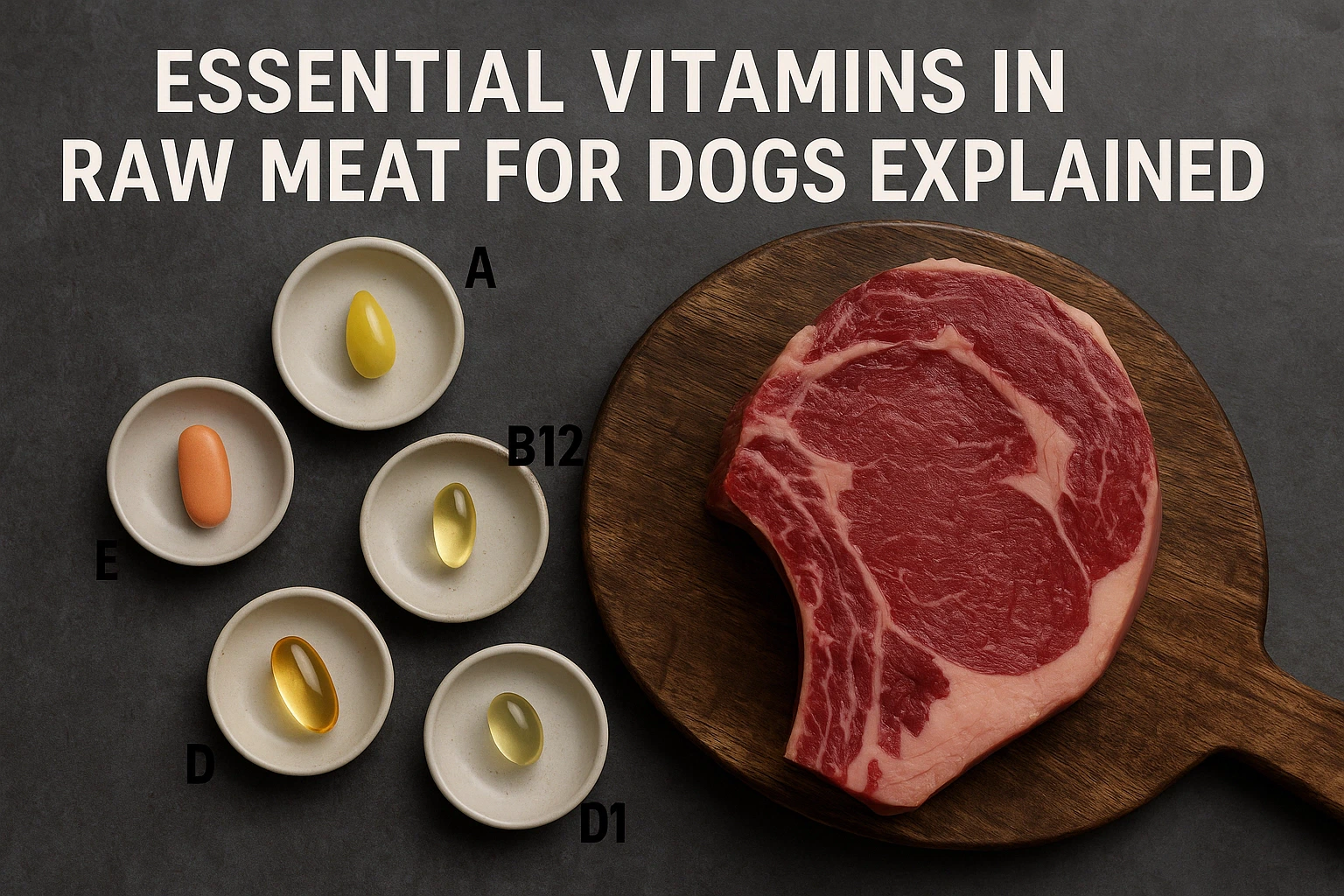
Raw feeding is often judged by protein and fat numbers, yet metabolic health in dogs is governed by micronutrients. This post examines the profile of vitamins in raw meat, how they function, and whether a meat based diet alone can meet canine requirements. We will focus on fat soluble vitamins A, D, E, and K, and the B complex, including thiamine, riboflavin, niacin, pyridoxine, folate, and cobalamin. You will learn which tissues are dense sources, for example liver for vitamin A and B12, and which are limited, such as vitamin E and D in most land animal muscle. We will compare bioavailability in raw tissues, discuss variability by species and feeding system, and note factors that degrade vitamins, including oxidation during storage and thiaminase in certain raw fish. Expect a technical walkthrough of NRC and AAFCO reference needs, typical gaps in common raw formulations, and when strategic organs, oily fish, eggs, or supplementation are warranted. By the end, you will be able to evaluate a raw recipe for vitamin sufficiency and make evidence based adjustments.
Understanding Raw Diets for Dogs
Popularity and observed benefits
Raw feeding has moved from niche to mainstream as owners seek diets closer to a canine ancestral pattern and tighter control over ingredient quality. In 2023, around 40% of premium pet owners reportedly shifted toward raw meat formulations, with online sales of frozen and freeze-dried meat foods up 45%, and functional blends with added probiotics and vitamins representing 30% of launches, reflecting robust demand and innovation market data on raw pet diet adoption and product innovation. While debate continues regarding superiority over processed diets, the practical outcomes many owners track are tangible. Reported benefits include shinier coats linked to essential fatty acids, and improved vitality as bioavailable amino acids and the vitamins in raw meat, notably B vitamins, support energy metabolism. Owners often note better stool quality and less gas, consistent with the lower fiber content of many raw formulations and higher digestibility overview of raw diet benefits and risks. Cleaner teeth and improved skin are also common observations, and targeted additions like oily fish can increase EPA and DHA, while organ meats can contribute vitamin D and folate when fed in controlled amounts.
Risks and how PrimalBox mitigates them
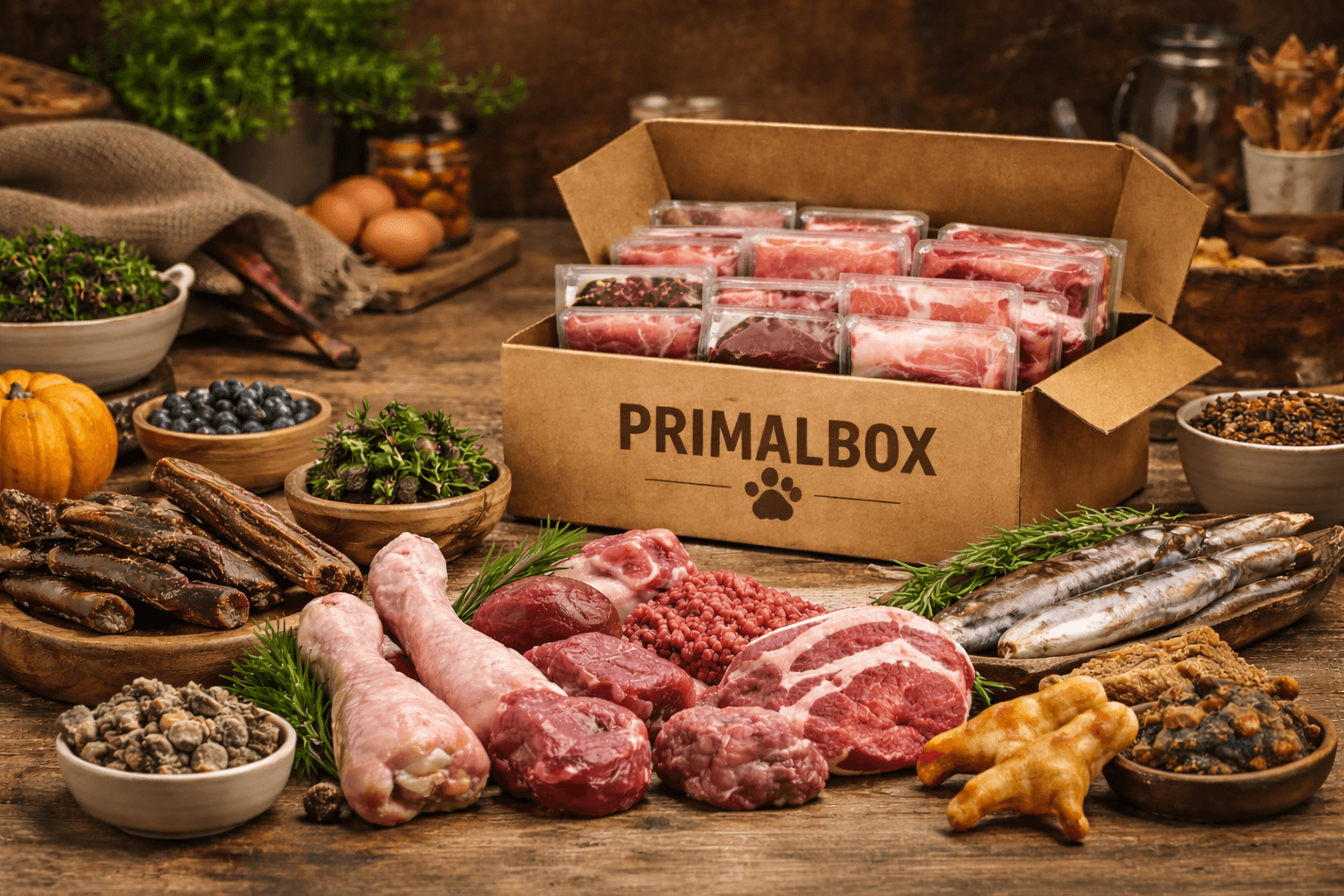
Key risks include bacterial contamination, particularly Salmonella and E. coli, which necessitate strict hygiene, refrigerated thawing, separate utensils, and prompt bowl sanitation. Nutritional imbalance is another concern; for example, excessive liver can lead to hypervitaminosis A or D, and inadequate calcium relative to phosphorus can compromise bone health, so balanced recipes typically target an approximate calcium to phosphorus ratio near 1.2 to 1. Some research on raw meat-based diets notes higher blood urea nitrogen and creatinine, findings generally consistent with higher protein intake; periodic veterinary monitoring is advisable for individual dogs. PrimalBox addresses these challenges by using human-grade, additive-free ingredients prepared in hygienic environments, then rapidly freezing and delivering them frozen from Birmingham to maintain safety and freshness. The Balanced Ultra Complete, combining British beef, lamb tripe, free-range chicken, and vegetables, is formulated to simplify raw feeding while supporting micronutrient sufficiency, including folate, B vitamins, and naturally occurring vitamins in raw meat, plus fiber for stool quality. For owners, the actionable path is clear, choose complete formulations, follow strict handling hygiene, and adjust portions gradually while tracking coat gloss, energy, and stools for objective feedback.
Key Vitamins Found in Raw Dog Food
Raw dog food derives much of its nutritional value from intact animal tissues, which concentrate fat-soluble and water-soluble vitamins alongside highly bioavailable minerals. For intermediate feeders seeking precision, the focus vitamins are D, K, and B12, with calcium and iron as the anchor minerals. Together these nutrients regulate skeletal development, neuromuscular activity, oxygen transport, and cellular energy yield. Dogs synthesize little usable vitamin D from sunlight, so dietary inputs are decisive. A balanced formulation that includes meaty bones, organs, and select plant matter can meet requirements while avoiding excesses. Rotating proteins across poultry, beef, lamb tripe, and oily fish improves micronutrient coverage over time.
Essential vitamins in raw diets
Vitamin D supports intestinal absorption of calcium and phosphorus, promoting proper bone mineralization and enamel strength. Rich sources include fatty fish, egg yolk, and liver, as summarized in this overview of raw diet supplements vitamin D sources and roles. Vitamin K, especially K1 from leafy greens and K2 from animal organs, is required for activating clotting factors and bone proteins; organ blends and green inclusions provide coverage vitamin K in raw feeding. Vitamin B12 drives methylation, red blood cell formation, and myelin maintenance, and is abundant in liver, kidney, fish, and red meat B12 functions for dogs. Deficiencies in any of these can manifest as poor growth, anemia, neurologic signs, or coagulopathy.
Calcium and iron, metabolic linchpins
Calcium underpins skeletal integrity, nerve transmission, and muscle contraction. In raw diets, edible bone typically supplies calcium and phosphorus; target a calcium to phosphorus ratio near 1.2 to 1.4 to 1 for adults, adjusting upward for growth. Iron is required for hemoglobin and mitochondrial enzymes, with highest concentrations in spleen and liver. Adequate iron supports aerobic capacity, coat pigmentation, and thermoregulation. Pairing iron with vitamin C containing vegetables can enhance absorption, though heme iron from organs already has superior bioavailability.
Practical balance and chicken liver
Chicken liver is an excellent source of vitamin A for vision and epithelial health, and it delivers highly bioavailable iron for erythropoiesis. Use liver strategically at roughly 5 percent of weekly intake to prevent hypervitaminosis A and excessive vitamin D from organ overuse. Maintain bone at 10 to 15 percent for adult maintenance to hit calcium targets and promote firm stools. For puppies, closely manage calcium and vitamin D within growth-safe ranges to protect developing joints. Periodic recipe audits and rotation of organ types help sustain micronutrient balance across seasons, setting the stage for the next step in precise raw feeding.
Benefits of Raw Dietary Vitamins on Canine Health
Raw feeding delivers intact fat soluble and water soluble vitamins in their native matrices, which can translate into observable health gains when diets are complete and balanced. Vitamins A and E from organ meats and adipose tissue support epithelial integrity and antioxidant defense, while B complex vitamins from liver, heart, and tripe drive mitochondrial energy metabolism. Coupled with essential fatty acids naturally present in raw muscle and fat, these nutrients help convert dietary energy efficiently and sustain daily activity without postprandial lethargy. In practice, balanced formulations that combine beef, lamb tripe, chicken, and vegetables distribute these micronutrients alongside amino acids and minerals so they can act synergistically.
Coat, skin, and energy
A and E, biotin, and zinc collaborate with omega 3 and omega 6 to reduce transepidermal water loss, limit pruritus, and promote a glossy coat. Reports of improved skin and coat are consistent with technical overviews of raw nutrition benefits in pets, including better dermal condition and reduced inflammation summary of benefits. B12, niacin, and riboflavin in organ-rich blends improve red cell function and oxidative metabolism, which many owners recognize as steadier energy rather than short spikes.
Digestion, stool size, and consistency
Raw diets tend to be highly digestible and lower in non fermentable fiber, so more nutrients are absorbed and fecal output often declines, with stools that are small, firm, and easy to pick up. Calcium from edible bone firms stools; too much bone can yield dry, chalky feces. Actionable targets many practitioners use are 8 to 12 percent edible bone as fed and 5 to 10 percent low starch vegetables to buffer stool quality. Adjust in 5 percent increments while monitoring hydration and fecal texture.
Microbiome support
Natural enzymes, collagen, and green tripe can nurture beneficial bacteria. A gradual 7 to 10 day transition, rotation of proteins every 2 to 4 weeks, and inclusion of tripe at 10 to 15 percent are practical steps correlated with fewer digestive upsets and more regular stools, aligning with guidance that raw feeding may foster a healthier gut environment microbiome discussion.
Teeth and bones
Vitamins D and K work with calcium and phosphorus to mineralize teeth and maintain jaw bone density, while vitamin C supports periodontal collagen turnover. Mechanical chewing of appropriately sized raw meaty bones helps disrupt plaque before it calcifies, which aligns with reports of cleaner teeth on raw-inclusive routines. For safety, choose bones larger than the molars, select softer non weight bearing options, feed two or three supervised sessions per week, and avoid cooked bones. These practices, paired with vitamin sufficiency, support strong teeth and resilient bones.
Risks Associated with Raw Diets and Mitigations
Microbial and zoonotic risk management
Raw meat can carry zoonotic pathogens that threaten canine and household health. A systematic review of raw meat-based diets identified Salmonella in roughly 20 percent of products, Listeria monocytogenes in over 50 percent, and E. coli, including resistant strains, in about 80 percent of samples, indicating a nontrivial exposure risk zoonotic pathogens detected in raw pet foods. Dogs may remain asymptomatic yet shed organisms in feces and saliva, which elevates risk for infants, older adults, and immunocompromised people. Mitigations include sourcing human-grade meats, enforcing cold-chain integrity below minus 18 degrees Celsius, and thawing in a refrigerator held at 0 to 4 degrees Celsius. Use separate utensils, sanitize preparation areas after handling, and discard uneaten raw food promptly; freezing reduces but does not eliminate many pathogens, so hygiene remains critical.
Preventing nutrient imbalance
A technical risk with home-formulated raw diets is micronutrient imbalance. Vitamin D is concentrated in liver, so exceeding roughly 5 percent liver in the weekly ration can precipitate hypervitaminosis; balance organ inclusion against fish or egg sources to achieve appropriate vitamin D without toxicity. Maintain a calcium to phosphorus ratio near 1.1 to 1.5 to 1 using edible bone or precisely dosed calcium if feeding boneless muscle meats. Raw diets are typically low in fermentable fiber, which can affect stool quality; incorporating 5 to 10 percent low-glycemic vegetables or a measured soluble fiber source can normalize transit while preserving the benefits of vitamins in raw meat. Periodic bloodwork helps interpret physiologic shifts common in RMBD-fed dogs, such as higher BUN and creatinine, and validates dietary adequacy.
PrimalBox’s mitigation framework
PrimalBox focuses on human-grade, additive-free ingredients processed under strict hygiene with rapid freezing to stabilize microbial loads and nutrient integrity. Complete recipes, including options with British beef, lamb tripe, and free-range chicken plus vegetables, are designed to cover essential vitamins and minerals across life stages. Operational controls include batch traceability, sealed frozen packaging, and delivery in insulated containers to maintain the cold chain to the customer’s door. Practical guidance accompanies orders, such as portioning to avoid repeated thawing, safe bowl sanitation, and fridge-only defrost protocols. This integrated approach helps owners access safe, balanced raw food while minimizing contamination and nutritional imbalance risks.
Emerging Trends in Raw Dog Food Diets
Shift toward natural, minimally processed inputs
Pet owners are prioritizing short, transparent ingredient decks, human-grade proteins, and additive-free recipes. Survey data indicate that roughly 23% of shoppers actively seek limited-ingredient formulations, a proxy for demand for cleaner labels and fewer processing steps, as reported in global pet food trends. This shift aligns with interest in retaining heat-sensitive micronutrients, for example vitamins in raw meat such as B vitamins and vitamin K that can be reduced by high-temperature extrusion. For raw feeders, the technical implication is to pair minimally processed meats with validated micronutrient balances, covering vitamin D, calcium, folate, and trace minerals to meet FEDIAF or AAFCO profiles. Ingredient transparency also expands traceability, which supports risk management when handling raw proteins.
Homemade raw diets and mix-in strategies
Households are increasingly preparing partial or full raw meals, or using raw toppers to improve palatability and nutrient density. The main constraint is formulation accuracy, ensuring appropriate calcium to phosphorus ratios and controlled vitamin D loads, particularly when using liver, which can lead to excess if not rationed. Because raw diets are typically lower in dietary fiber, owners should monitor stool consistency and add low-oxalate vegetables or soluble fiber where needed to maintain gut motility. Actionable steps include weighing ingredients to the gram, using a nutrient calculator, rotating proteins weekly, and scheduling periodic veterinary checks for growth and body condition.
Customized and condition-specific nutrition
Personalization is accelerating, from life stage targeting to dermatologic and gastrointestinal support diets. Clinically, dogs on raw meat-based diets can show different biochemical baselines, including higher BUN and creatinine in some cohorts, so obtaining pre- and post-transition bloodwork is prudent. For sensitive dogs, start with single-protein formulas and add diversity only after tolerance is confirmed. Performance dogs may emphasize higher omega-3 inputs, while puppies require precise calcium and vitamin D provisioning to support skeletal development.
Market outlook and what it means for buyers
The fresh and raw segment is scaling through retail and direct-to-door models, aided by cold-chain logistics and subscription services. Analysts project the global raw, fresh, and frozen dog food market to reach roughly 3.17 billion USD by 2035 at a 4.8% CAGR, see market forecast to USD 3.17B by 2035. Strategic entry by large incumbents, highlighted in industry coverage of fresh launches, validates demand for minimally processed diets. For purchasers, prioritize suppliers with frozen delivery, batch-level testing, and complete, balanced profiles, then use mix-ins only where a nutrient gap or palatability need is identified.
Implications of Raw Feeding for Dog Owners
Making an informed decision
Raw feeding should align with life stage, activity, and medical history. Start by auditing body condition, stool quality, dental status, and GI sensitivity before switching. Map how vitamins in raw meat are distributed, liver concentrates vitamins A and D, tripe supplies B vitamins, and heart contributes taurine. A working blueprint is 70 to 80 percent muscle, 10 percent edible bone, and 10 percent organ with half as liver. Puppies require tighter calcium and energy control than adults.
Balancing benefits and risks
Observed benefits include cleaner teeth, improved skin and coat, higher energy, and smaller stools, consistent with the lower fiber of raw formulas. Some studies report higher BUN and creatinine on RMBD, changes that can reflect high protein intake rather than pathology. Nutritional imbalance is the primary risk, for example excess vitamin A from overfeeding liver or calcium deficits in boneless plans. Microbiological hazards are real given contamination found in raw pet foods. See summaries in this primer and this analysis. Weigh benefits against measured outcomes and veterinary guidance.
Safe handling and preparation
Apply kitchen-level HACCP. Keep raw at or below 4 C, thaw in the refrigerator, and use within 24 to 48 hours. Segregate tools, disinfect surfaces with a dilute bleach solution, and wash hands for 20 seconds. Freeze for up to 3 months for ground mixes and label batches for rotation. Supervise chewing and choose size-appropriate raw meaty bones, never cooked bones. Schedule weight checks, stool scoring, and periodic bloodwork to catch emerging imbalances early.
A practical route with PrimalBox
For owners seeking raw nutrition without complex sourcing, PrimalBox provides human-grade, additive-free meals delivered frozen from Birmingham. Balanced Ultra Complete, combining British Beef and Lamb Tripe with Free-Range Chicken and vegetables, helps cover vitamin and mineral needs while supporting firm stools and digestibility. Portionable blocks cut handling time and exposure. Regular deliveries foster consistency, including for puppies. Home hygiene still matters, yet standardized preparation reduces preventable risk and effort.
Conclusion: The Role of Vitamins in Raw Diets for Dogs
Vitamins in raw meat occur within intact tissues alongside amino acids, essential fatty acids, and bioavailable minerals, which helps explain gains in digestion, coat, and energy, with smaller, firmer stools. Anecdotal observations also include cleaner teeth and improved skin, and many owners value the transparency of raw feeding. At the same time, evidence is mixed on superiority, with some studies showing no clear advantage over commercial diets; raw recipes are lower in fiber, and safety concerns include pathogen exposure. Clinical markers can shift with higher protein intake; for example, dogs on raw meat based diets display higher BUN and creatinine without clinical kidney disease. These nuances argue for evidence guided implementation rather than ideology.
The critical lever is balance. Meet vitamin D and calcium needs while avoiding excess from rich organs; keep total organs near 10 percent of the ration and limit liver to roughly 5 percent to prevent hypervitaminosis risk. Target a calcium to phosphorus ratio near 1.2 to 1.4 to 1, use edible bone or measured calcium sources, and include vitamin K and folate via green tripe and leafy vegetables. Add oily fish for long chain omega 3s, rotate proteins, and introduce modest plant fiber if stools are too dry. Work with your veterinarian, and for puppies, pregnant bitches, seniors, or dogs with medical conditions, consider periodic bloodwork to confirm adequacy and safety. PrimalBox supports this approach by delivering human grade, additive free, balanced raw meals, frozen for quality, helping owners feed nutrient dense diets confidently.
Products
-

-
-


4 thoughts on “Essential Vitamins in Raw Meat for Dogs Explained”
Pingback: Exploring Affordable Raw Diets for Dogs - PrimalBox
Pingback: Comparing Raw Dog Food Delivery Options - PrimalBox
Pingback: Top Raw Dog Food Suppliers for Optimal Canine Health - PrimalBox
Pingback: Exploring Raw Food Options for Dogs - PrimalBox