Comparing Leading Frozen Dog Meat Suppliers

Not all frozen proteins are created equal, and the supplier you choose can shape everything from product safety to customer trust. If you are evaluating frozen dog meat suppliers, you need more than glossy brand promises. You need verifiable standards, consistent performance, and a clear view of the trade offs that matter to your business.
This comparison lays out the criteria that separate market leaders from the pack. You will learn how sourcing transparency, species selection, and formulation practices affect nutritional integrity. We will examine microbiological controls, HACCP programs, third party testing, and recall history to gauge real world safety. Cold chain reliability, packaging formats, grind consistency, and lot traceability will be reviewed to judge operational quality. Pricing structures, minimum order quantities, lead times, and regional distribution will help you assess fit and scalability. We will also note certifications, regulatory compliance, sustainability commitments, and customer support responsiveness.
By the end, you will have a practical framework to shortlist suppliers, match offerings to your requirements, and spot red flags early. Whether you manage a specialty raw program or a multi location retail operation, this guide equips you to make a confident, data informed choice.
Understanding Key Comparison Criteria
Nutritional value and ingredients
Start by scrutinizing formulation quality. Human-grade, additive-free proteins, with transparent sourcing and lot-level traceability, are nonnegotiable. Decide whether you prefer PMR style formulas that prioritize meat, bone, and organ, or BARF-style blends that add low-glycaemic vegetables, both are valid when balanced correctly, and single-protein options can help dogs with sensitivities. A practical benchmark is complete recipes that combine varied organ meats with muscle meat, for example beef with lamb tripe, plus measured calcium and essential micronutrients. Functional inclusions are rising, about 47% of new frozen products add probiotics or omega-3s for digestive and immune support, according to this frozen pet food market analysis. For a primer on PMR versus BARF trade-offs, see this nutritionist’s review of commercial raw diets.
Delivery logistics and convenience
Cold chain reliability is critical. Insulated packaging with dry ice or gel packs should keep product frozen through the final mile, note that cold chain can raise operating costs by roughly 43% versus shelf-stable, so expect a premium. Subscriptions have grown about 35% because they reduce stockouts and simplify planning, but evaluate flexibility, skip options, and delivery windows. Ask suppliers for regional dispatch hubs to shorten transit times, UK suppliers shipping from central locations, such as the Midlands, often achieve more consistent doorstep temperatures. Compare real-world convenience by checking minimum orders, cut-off times, packaging recyclability, and average thaw guidance per chub to match your feeding routine.
Pricing and value for money
Benchmark cost per 1,000 kcal, not just per pound. Fresh-frozen typically lands around 2 to 4 USD per pound, while freeze-dried often exceeds 6 USD, higher prices can be justified by human-grade inputs and rigorous testing. Seek bulk savings via mixed boxes, multi-dog bundles, and subscription discounts. Factor in shipping, packaging, and potential dry ice fees when comparing suppliers at parity. Value also includes portioning convenience, complete-and-balanced recipes, and access to feeding support for puppies and adults.
Safety standards, feedback, and reliability
Ask about pathogen controls, many facilities use HPP or equivalent kill steps, plus batch-level “test and hold,” with certificates of analysis on request. Confirm sanitation audits, supplier approval programs, and documented recall procedures. Review verified customer feedback for coat and digestion improvements that align with raw diet benefits, while noting honest reports about packaging durability and transition-related digestive upsets. Reliability signals include on-time delivery rates, damage claim ratios, and responsive support. Considering these factors together will let you shortlist frozen dog meat suppliers with confidence before moving into side-by-side comparisons.
PrimalBox: The Human-Grade Raw Food Choice
Ingredient quality and pack configuration
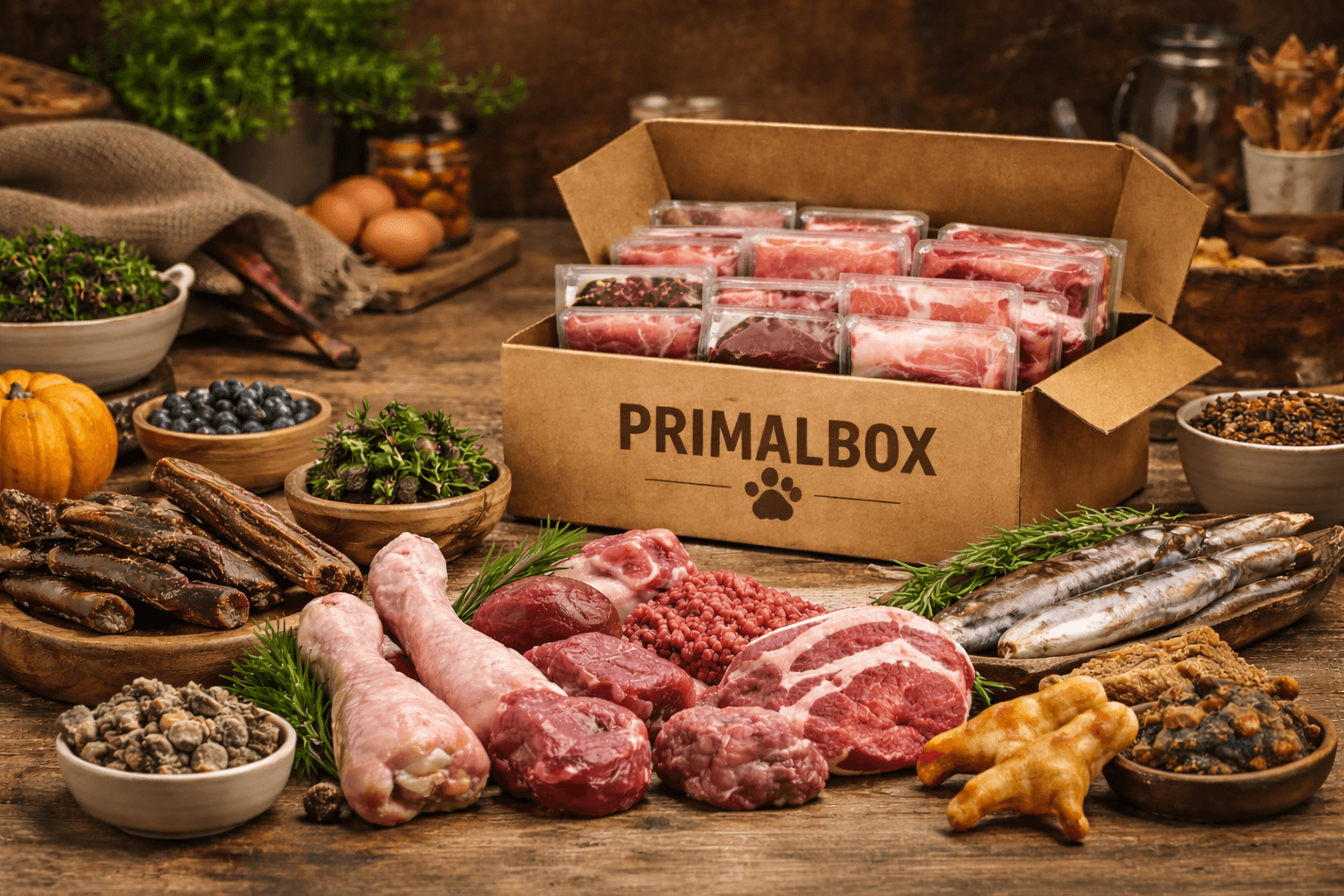
As you compare frozen dog meat suppliers, focus on provenance and flexibility, PrimalBox centers its recipes on British beef, lamb tripe, and free-range chicken sourced from certified UK partners for freshness and welfare. British beef supplies essential amino acids and heme iron for lean mass, lamb tripe brings natural enzymes that often suit sensitive stomachs, and free-range chicken offers a leaner option for calorie management. The Balanced Ultra Complete combines these proteins with vegetables to deliver a ready, all-in-one baseline that simplifies rotation and maintains consistency across meals. For owners who want tighter control, the Customisable Raw Dog Food Box lets you schedule 12 or 24 blocks of single protein human-grade mince, ideal for structured trials or targeted macros customisable human-grade mince blocks. Review PrimalBox’s ingredient handling, human-grade standards, and free-range sourcing in the FAQ before building your plan sourcing and free-range standards.
Health outcomes and delivery logistics
Additive-free raw diets are associated with improved digestion, healthier skin and coat, cleaner teeth, and steadier energy, benefits linked to better gut microflora and more stable blood sugar in raw-fed dogs. Within this framework, Balanced Ultra Complete is a strong starting point for four to six weeks, then you can layer in single proteins to confirm tolerance, manage body condition, and sharpen performance. Whole meats, bones, and organs support mineral balance and enzyme activity, and many owners observe firmer stools as digestibility improves. PrimalBox ships meals frozen from Birmingham to protect nutrient integrity, and subscriptions can be adjusted, paused, or cancelled as needs change, which reduces the risk of stockouts and overfeeding. If sustainability factors into your decision, choosing locally sourced British meats and right-sized delivery intervals can help moderate transport impact while you maintain the health benefits of a premium raw regimen.
Nutritional and Health Benefits of Raw Diets
Skin, coat, and joints
When comparing options from frozen dog meat suppliers, complete, human-grade recipes typically deliver the most visible coat and skin gains. Beef, lamb tripe, and chicken skin supply omega-3 and omega-6, while vegetables contribute vitamin E for antioxidant support. Natural collagen and cartilage in raw mixes aid joint resilience and post-exercise recovery. Owners often see brighter coats within one coat cycle, and vets outline these benefits in this guide.
Digestion and nutrient absorption
Complete frozen raw is highly digestible, with moisture and no cereal fillers to support gastric motility. Many dogs produce smaller, firmer stools, a practical sign of efficient nutrient uptake and steadier blood sugar between meals. Balanced calcium to phosphorus from ground bone supports enzyme activity and stool quality. These outcomes are frequently noted in evidence reviews, including digestion and energy benefits summarized in balanced raw diet benefits and risks.
Teeth and gums
Dental gains vary by approach. Size-appropriate raw bones can reduce plaque, but they need strict supervision to avoid fractures or obstructions. Many complete blends use ground bone and chunky cuts to encourage chewing without hard-bone risks. Serve partially thawed chunks, never feed cooked bones, and match chew size to your dog’s molar width.
Behavior and gut health
The gut-brain axis links microbiome balance with stress reactivity and focus. Additive-free raw with green tripe and modest prebiotic vegetables can lower GI irritation, often yielding calmer behavior. DIY raw can work, but micronutrient and fiber consistency is harder to reproduce than with complete packs such as PrimalBox. Transition over 7 to 10 days, track stool and energy, then fine-tune fat or fiber. Next, weigh these benefits against budget and logistics.
Current Trends in Frozen Dog Food Market
Pet humanization and the shift to less processed diets
Pet owners now buy for dogs as they do for family, prioritizing human-grade ingredients, transparency, and measurable health outcomes. Surveys show strong family identification and a willingness to pay for wellness, trends detailed in the frozen pet food market analysis. For buyers comparing frozen dog meat suppliers, this translates into closer scrutiny of sourcing, additives, and processing level. Minimally processed, raw options are gaining share as owners report better digestion and energy, with many favoring clear lot traceability and simple ingredient decks. Actionable check: request certificates of origin, batch test results, and a plain-English processing description before you commit.
Growth outlook and safety innovations
The category’s momentum is measurable. Refrigerated and frozen formats are expanding quickly, supported by rising pet care spend and convenience, as noted in this overview of frozen pet food market growth. Projections point to a frozen dog food market reaching roughly 6.87 billion dollars by 2030, buoyed by demand for premium, minimally processed meals. Against this growth, safety is a deciding variable. Around 60 percent of facilities now deploy High Pressure Processing to reduce Salmonella and Listeria while preserving nutrients; compare HPP versus non-HPP lines by asking about HACCP plans, third-party audits, and frozen-chain integrity.
Moisture-rich, nutrient-dense feeding and practical selection
Moisture-rich raw diets are rising because they align with canine physiology, supporting gut microflora, stable blood sugar, and weight control. When choosing format, weigh frozen patties or nuggets against bulk chubs. Patties offer portion control and reduced waste; chubs often lower cost per kilogram for multi-dog homes. Also compare complete formulations with vegetables and micronutrients against bare 80-10-10 blends if you want turnkey balance for puppies or active adults. In short, prioritize human-grade, additive-free, moisture-forward recipes, rigorous safety validation, and delivery models that make consistent raw feeding simple.
Tips for Choosing the Right Supplier
Assess your dog’s specific dietary needs
Start with your dog’s profile. Life stage and activity drive macronutrient targets. Puppies and hard working adults may need higher protein and calories, while seniors benefit from leaner recipes with joint support. Raw diets correlate with steadier energy and improved gut microflora. Begin at 2 to 3 percent of ideal body weight, then adjust by stool quality and body condition.
Understand the supplier’s sourcing and production methods
When evaluating frozen dog meat suppliers, insist on ingredient transparency and audited safety. Prioritize human-grade inputs, additive-free recipes, and lot traceability verified under HACCP or ISO 22000. See PetfoodIndustry’s vetting guide for a benchmark. Scrutinize labels for named proteins, organ balance, and declared bone content. Request batch certificates of analysis and recent pathogen tests.
Evaluate the frozen delivery and storage logistics
Frozen logistics protect nutrient integrity. Choose insulated packaging with dry ice or gel packs rated for 48 to 72 hours. Ask for a transit map and a delay policy. Store at or below 0 F, minus 18 C, and follow first in, first out. A 30 liter freezer often holds 12 to 15 kilograms of compact packs.
Compare price points for perceived value
Compare price by effective feeding cost, not headline per kilogram. A 25 kilogram active dog eating 2 percent of body weight needs about 500 grams daily. At £5 per kilogram, that is roughly £2.50 per day. Weigh completeness, pack efficiency, bulk pricing, and subscription savings. Consider sustainability reporting, as 2026 audits show rising disclosure see this overview.
Review customer testimonials and feedback
Interrogate testimonials for outcomes that matter. Prioritize reviews noting stool consistency, coat gloss, energy, and long term tolerance, not just palatability. Check delivery punctuality, issue resolution time, and packaging performance in heat. Favor suppliers with transparent replies to negatives and a documented recall policy. As a rule, seek averages above 4.5 out of 5 across hundreds of verified reviews. Together, these checks create a robust, buyer-ready shortlist.
Our Recommendations for Pet Owners
Why PrimalBox stands out
PrimalBox stands out among frozen dog meat suppliers by combining human-grade, additive-free meats with real customization. Build 6, 12, or 24 block boxes, each 454 grams, from chicken, turkey, beef, lamb, tripe, or salmon. If you prefer a complete meal, Balanced Ultra Complete pairs British beef and lamb tripe with free-range chicken and vegetables. Compared with fixed menus, this modular approach supports protein rotation and targeted fat levels.
Ensuring consistent delivery and quality assurance
Consistency matters. PrimalBox offers predictable bi-weekly or monthly deliveries from Birmingham with eco-friendly insulation and the option to pause or change your plan. Products are fresh-frozen to lock nutrients, and the company sources butcher-grade cuts under strict hygiene protocols. A 24 block plan keeps most medium dogs supplied for 3 to 5 weeks, reducing stockouts and preserving diet continuity.
Balancing price and benefits
On value, weigh outcomes against spend. Raw diets are linked with improved digestion, healthier skin and coats, and steadier energy, with firmer stools often seen within two weeks. Consider total cost of ownership, including fewer toppers and potential reductions in dental cleanings. Balance benefits with impacts, since premium meat diets can raise climate pawprints; favor poultry more often, right-size orders, and minimize waste.
How to introduce raw safely
Introduce raw gradually. Start at 25 percent of the daily ration for 2 to 3 days, move to 50 percent for another 2 to 3 days, then 75 percent before a full switch by days 7 to 10. Monitor stool score and appetite, and adjust speed accordingly. Thaw in the refrigerator, sanitize utensils, and never refreeze once fully thawed.
Work with your vet for a tailored plan
Work closely with your veterinarian. Secure a baseline exam, weight, and body condition score, then recheck at 4 to 6 weeks and quarterly thereafter. For puppies, confirm growth targets and appropriate calcium to phosphorus ratios; for dogs with pancreatitis risks, discuss lower fat proteins. Ask about probiotics and parasite screening. A tailored plan supports healthy gut microflora and endocrine stability.
Conclusion: Making Informed Choices
As you compare frozen dog meat suppliers, prioritize human-grade, additive-free ingredients, transparent sourcing, and lot-level traceability. Choose complete formulations with balanced macro and micronutrients, not single-protein mixes, and packaging that enables accurate portioning, for example 454 gram blocks. Evaluate cold-chain reliability, HACCP-style safety protocols, and price per meal rather than per kilogram. PrimalBox aligns with these criteria, pairing British proteins with frozen doorstep delivery from Birmingham to simplify consistent raw feeding.
The case for raw is strong when executed responsibly. Studies and field reports link raw diets to improved digestion, healthier skin and coat, cleaner teeth, steadier energy, and support for gut microflora and blood sugar. Balance those gains with sustainability, because premium meat-heavy menus can carry a larger climate pawprint than an owner’s, so favor local proteins and plan portions to reduce waste. Keep choices tailored by logging stool firmness, body condition score, and itch frequency for 4 to 6 weeks, then adjust. With the market expanding through 2026 and transparency rising, reassess suppliers quarterly and choose the fit that best serves your dog and your household.
Products
-

-
-