Is Raw Dog Feeding Worth the Cost?
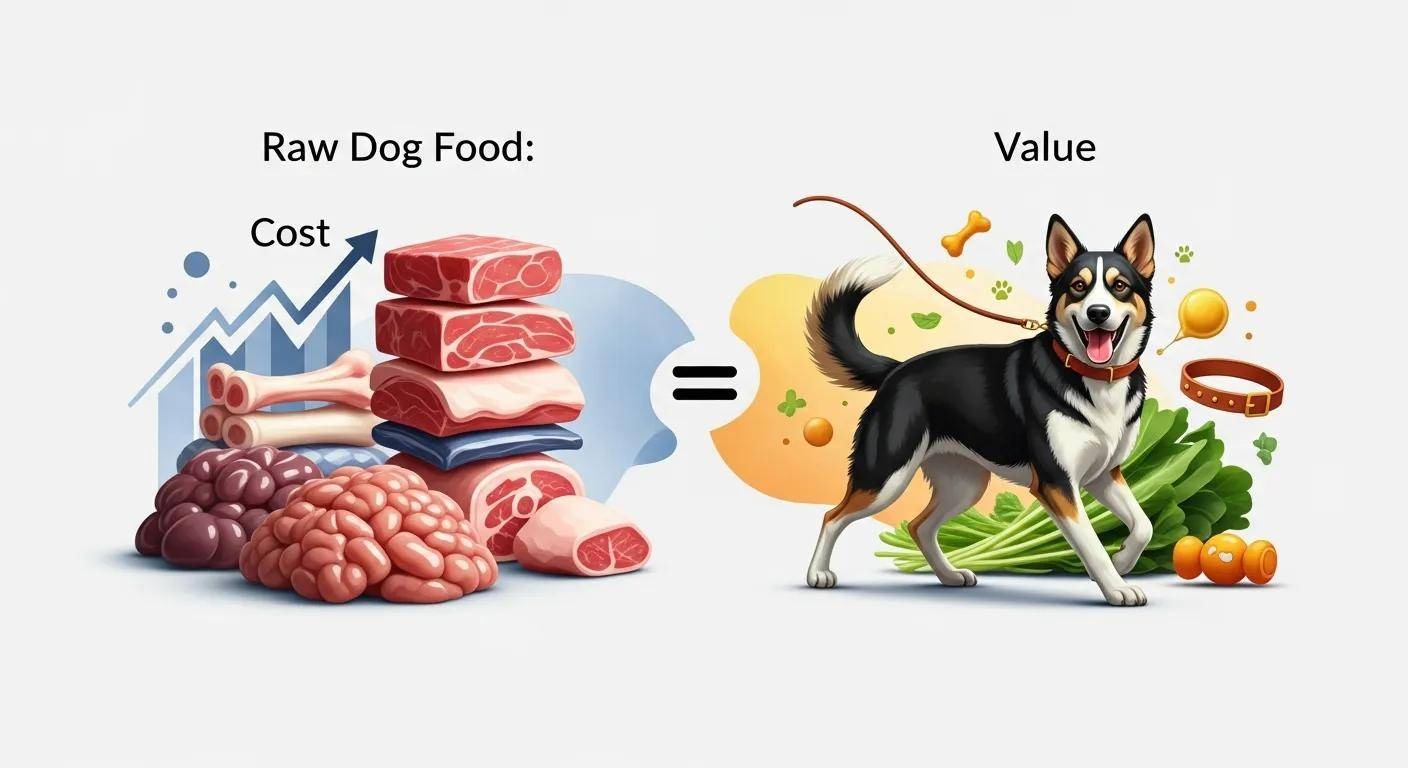
Raw Dog Food — Cost vs. Value
Raw feeding means offering dogs minimally processed, meat-first meals — usually a mix of muscle meat, organs and edible bone — instead of highly processed dry kibble. This guide puts hard numbers around a raw diet: what you’ll spend, which factors move the price, and whether the nutrition and possible long-term health wins can justify the cost. You’ll get realistic monthly budgets for common dog sizes, a per-kilogram and per-day comparison versus premium kibble, and practical budgeting tips for UK households. We use clear assumptions, worked examples and published PrimalBox prices so the maths is easy to follow, and we show how sensible ordering and subscriptions can lower the barrier to trying raw. Read on for a step-by-step cost breakdown, a side-by-side with kibble, an honest look at potential health offsets, and hands-on budgeting tools.
Understanding the real costs of feeding raw
Costs fall into two buckets: one-off setup items and recurring food costs. Setup is things like freezer space, storage containers and safe prep practices; ongoing spend depends on how much you feed, ingredient quality and delivery cadence. To estimate ongoing costs you need clear assumptions about feeding rate and unit weight — we use explicit examples so you can swap in your dog’s numbers. Knowing these drivers makes it easier to forecast weekly or monthly spend and to spot where savings come from (bulk buys, subscription discounts, mixing meals). The sections that follow include vendor-backed pricing and a short list of the common variables that shift monthly budgets.
How much does PrimalBox raw food cost per month?
Below we translate PrimalBox bundle prices into per-block and per-month figures for example dogs. Assumptions for the worked examples: each block = 400 g, feeding rate = 2.5% of bodyweight per day, and a 30-day month — adjust any of these to match your dog. PrimalBox bundles are listed at £12 for 6 blocks, £22 for 12 blocks and £42 for 24 blocks; subscriptions save 10%. The table below shows those bundle prices and the implied weight based on a 400 g block size.
With a 400 g block, cost-per-block is £2.00 (6-pack), £1.83 (12-pack) and £1.75 (24-pack); per-kg prices fall roughly between £4.38 and £5.00 depending on the bundle. For example, a 10 kg dog at 2.5% bodyweight eats 250 g/day (≈7.5 kg/month). At the 24-block rate (£1.75 per block) that’s about 19 blocks a month — roughly £33 without subscription and about £29.70 with the 10% subscription discount. These worked figures give a transparent baseline you can scale to different weights or block sizes.
What influences raw dog food costs?
Several variables change total spend: the dog’s size and activity (more active or larger dogs eat more), ingredient mix (higher muscle-meat or specialist proteins cost more), and logistics (delivery cadence, freezer space and spoilage affect convenience and waste). Puppies and working dogs often require higher feeding percentages; simpler beef or pork blends tend to be cheaper than premium single-protein recipes. Understanding these levers — portion control, mixing meals, subscription cadence — helps you prioritise where to cut costs without compromising nutrition. The next section compares raw to kibble using these considerations.
How raw stacks up against kibble on price
A fair comparison looks at per-day cost, not just per-kg, because raw and kibble differ in moisture and calorie density. A kilogram of raw contains more water and fewer calories than a kilogram of dry food, so comparing cost-per-day (based on realistic feeding grams) gives a practical answer for owners. The compact table below pairs PrimalBox pricing with a representative premium kibble range commonly seen in the UK to show how per-kg pricing translates into per-day cost for typical feeding rates.
Interpreting this: a 25 kg dog fed at 2.5% bodyweight/day (≈625 g/day) costs roughly £2.74/day on PrimalBox at the best bundle rate (~£4.38/kg). Premium kibble in the £3.50–£6.50/kg range works out to about £2.45–£4.55/day for the same dog, once you factor in calorie-adjusted portions. Because nutritional density, stool volume and palatability differ, compare diets on a per-day calorie or satiety basis rather than raw per-kg alone. The next section looks at longer-term affordability and how health outcomes can affect the equation.
How big is the price gap between raw and kibble?
Short answer: it varies. Raw can be cheaper, similar, or more expensive than kibble depending on bundle choice, feeding rate and the quality of kibble you’re comparing. Larger PrimalBox bundles give better per-block value (the 24-block at £42 has the lowest per-kg), and subscriptions cut that further by 10%. Low-cost supermarket kibbles may look cheap per kg but often require greater feeding volumes to meet energy needs, which raises per-day cost. To find what’s most economical for your dog, calculate daily calorie needs, convert both diets into per-day costs, then factor in storage, prep and waste. The following section examines how potential health offsets can change long-term affordability.
Is raw feeding worth the money? Health and long-term value
Deciding whether raw is “worth it” means weighing extra upfront and ongoing food costs against possible health outcomes that could reduce future vet bills and improve quality of life. Many owners report improvements in coat condition, stool quality and digestion after switching to raw — changes that can lower ongoing treatment or management costs for sensitivities. To evaluate value, track measurable health markers (body condition score, stool consistency, skin and coat) with your vet over several months to see if diet improvements translate into fewer appointments or treatments. The subsections below list realistic health benefits and conservative examples of how diet can reduce vet-related spend.
Which health benefits might offset raw spending?
Where diet helps, it can cut related care costs. Improved skin and coat may mean fewer dermatology visits and topical treatments. Cleaner stools and steadier digestion can reduce GI upset visits and diagnostics. Better weight control from a higher-protein, lower-carb diet can lower long-term risk of obesity-related orthopaedic or metabolic problems, potentially reducing future treatment bills. Always track outcomes objectively and work with your vet during any diet change — improved health is possible, but not guaranteed.
- Improved skin and coat: fewer topical products and dermatology appointments.
- Better stool quality: less frequent GI upset consultations and diagnostics.
- Weight and mobility management: lower risk of orthopaedic and metabolic issues over time.
These benefits vary by dog. The next section gives conservative examples of how improved health might reduce annual vet costs.
How could raw reduce vet bills over time?
Diet affects chronic conditions that drive recurring vet costs — improving a dog’s baseline health can reduce appointment frequency or treatment intensity. For instance, a dog with chronic skin or ear problems that responds to a diet change may need fewer steroid courses, medicated shampoos or specialist referrals, generating modest annual savings. A conservative example: if raw feeding cuts one recurring dermatology visit and two topical product purchases a year, those savings offset part of the monthly food premium. Results vary widely; view potential savings as possible but not certain, and use diet change alongside veterinary care and monitoring.
How PrimalBox helps make raw feeding affordable and easy
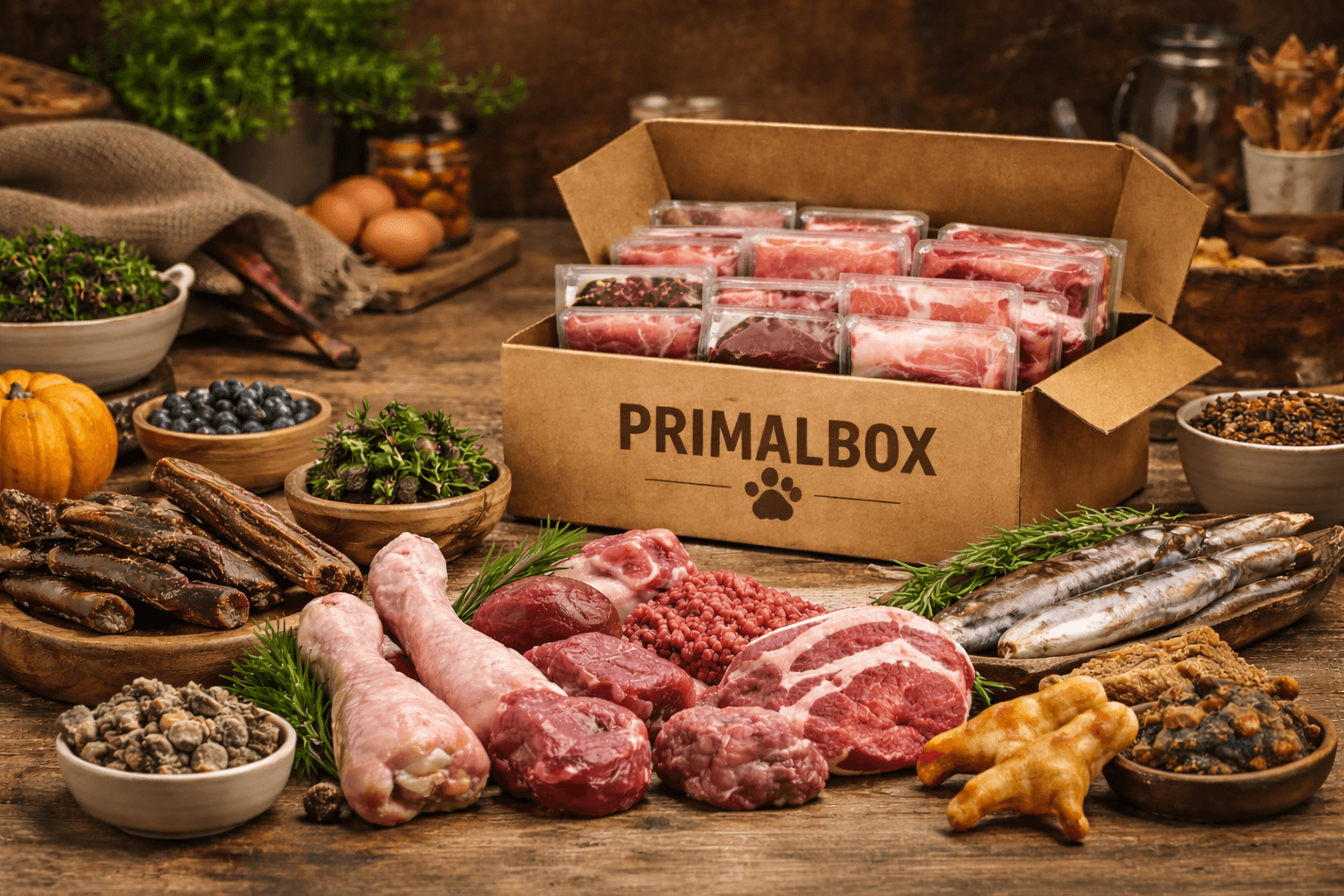
Good supplier choices reduce the friction of raw feeding: pre-portioned blocks, reliable delivery and subscription discounts cut time and waste, and make budgeting simpler. PrimalBox offers customisable boxes in 6, 12 and 24 block sizes, with human-grade mince blocks packaged for easy portioning; subscribing gives an exact 10% saving. Those features tackle three common pain points — portioning effort, freezer organisation and price predictability — so owners can trial raw with less hassle. The sections below run the subscription numbers and list budgeting tactics that pair well with pre-portioned bundles.
What subscription saving does PrimalBox provide?
PrimalBox gives a straightforward subscription benefit: 10% off bundle prices for subscribers. With list prices of £12 (6 blocks), £22 (12 blocks) and £42 (24 blocks), the subscription prices become £10.80, £19.80 and £37.80 respectively. The table below summarises those prices so you can see the exact per-block and per-kg impact of subscribing.
Example: if your dog’s monthly need equals one 24-block box, subscribing drops monthly spend from £42 to £37.80 — a predictable saving that adds up over the year and makes budgeting easier. The next subsection gives practical tips to pair with bundles and subscriptions.
Budgeting tips to manage raw food costs
Simple tactics cut unit costs, reduce waste and save time. Match bundle size to your dog’s consumption to avoid excess thawing; use subscription to lock in the 10% discount and remove reordering chores; consider mixing raw with high-quality kibble on occasional meals to smooth costs while keeping benefits; and portion blocks into daily serves on arrival to avoid waste and speed up meal prep. Below are quick, actionable tips you can use right away.
- Bulk alignment: pick bundle sizes that match monthly consumption to avoid leftover thaw and waste.
- Subscription use: lock in the 10% saving and benefit from regular deliveries.
- Mixing strategy: alternate raw with high-quality kibble on some days to lower average monthly cost.
- Freezer management: portion blocks into daily portions as soon as you buy to reduce thaw waste and simplify prep.
Used together, these tactics make raw feeding more predictable and easier to manage month-to-month.
Common questions about raw cost and value
Owners often want short, actionable answers about relative cost and monthly figures. Below are concise responses to the frequent questions, followed by a worked example for a 50 lb dog using the stated assumptions. Read the quick answers, then use the detailed calculation section to apply the maths to your dog’s weight and activity level.
Is raw dog food really more expensive than kibble?
Short answer: It depends. Raw can cost more, less or similar to kibble depending on what brands you compare, feeding rate and whether you use subscriptions or bulk discounts. Key variables are feeding grams per day, ingredient quality (human-grade versus commodity), moisture content and bundle/subscription choices. For a fair comparison, convert both diets to a per-day cost for the same caloric target and include storage and prep time. The detailed comparison in this article shows how to run that calculation step-by-step.
How much to feed a 50 lb dog on raw food?
Worked example with our assumptions: 50 lb ≈ 22.7 kg; at 2.5% bodyweight/day = 567.5 g/day (≈0.5675 kg/day); monthly need ≈ 17.0 kg (30 days). Using the 24-block assumption (9.6 kg per 24-block box at 400 g/block) and a £42 price, cost-per-kg ≈ £4.38 and monthly raw spend ≈ 17.0 kg × £4.38 ≈ £74.50. Applying the 10% subscription saving reduces that monthly figure to about £67.05. These are worked examples — change the block weight, feeding percentage or bundle and the totals will change. Tailor the formula to your dog and use subscription timing that matches your consumption to capture the saving.
How to plan a reliable raw dog food budget
A repeatable budgeting approach makes raw feeding predictable: calculate daily grams from weight and activity, set your feeding rate and block size, convert bundles into cost-per-kg or per-block, then apply subscription or mixing strategies to reach a monthly target. Check weight, body condition and stool quality monthly and re-run the numbers if intake changes. The next sections give sample monthly ranges for common weight classes and show how to use a simple manual cost calculator.
Monthly budget guide for UK dog owners
Sample monthly ranges using PrimalBox pricing and our standard assumptions (400 g block, 2.5% feeding rate, 30-day month). Small dog (~10 kg): monthly need ≈ 7.5 kg; estimated raw cost ≈ £33–£38 depending on bundle and subscription. Medium dog (~25 kg): monthly need ≈ 18.75 kg; estimated raw cost ≈ £82–£89 before subscription, ≈ £74–£80 with subscription. Large dog (~50 kg): monthly need ≈ 37.5 kg; estimated raw cost ≈ £164–£178 before subscription, ≈ £148–£160 with subscription. Use these ranges as a starting point and adjust for actual block weight, feeding percentage and chosen bundles; subscribing usually moves you toward the lower end and makes monthly spend more predictable.
How to use a raw feeding cost calculator
A simple manual calculator needs four inputs: dog weight, feeding rate (% of bodyweight), block weight and bundle price. Steps: convert feeding rate to grams/day (weight × feeding %), multiply by 30 for monthly grams, divide monthly grams by block grams to get blocks needed, then multiply blocks by per-block cost (or scale from the bundle price) and apply any subscription discount. Example: for a 22.7 kg dog at 2.5% with 400 g blocks and a £42 24-block price, monthly cost = (22.7×0.025×30)/0.4 × (42/24), adjusted for subscription as needed. Plug in your actual block weight and feeding percentage to get a precise monthly budget — the formula ties directly to the pricing examples above.
If you’re ready to compare options, remember PrimalBox offers 6, 12 and 24 block bundles and a clear 10% subscription saving — concrete levers to lower monthly spend. Careful comparison, accurate measurement and occasional recalculation deliver the most reliable budget for raw feeding.
Conclusion
Switching to a raw diet can bring meaningful health benefits and, in some cases, help reduce ongoing care costs — but the financial outcome depends on your dog and how you buy. Understanding the cost drivers, using larger bundles and subscribing when it suits your consumption are simple ways to make raw feeding affordable and predictable. PrimalBox’s pre-portioned bundles and subscription option are designed to simplify the switch and give predictable savings. If you’re considering raw, start with a clear plan and talk to your vet — and if you want to explore our range, check out the options that best match your dog’s needs.
Products
-

-
-